
section heading hidden

Our Latest News

19 Sep 2026
Growing Olive Trees in Pots on a UK Patio

14 Sep 2026
A Beginner's Guide to Making Hummus at Home
Article
- Home
- Blog
- By Why Olive Oil Deserves a Place in Healthy Diets
- Comments 35
- 20 Nov 2026
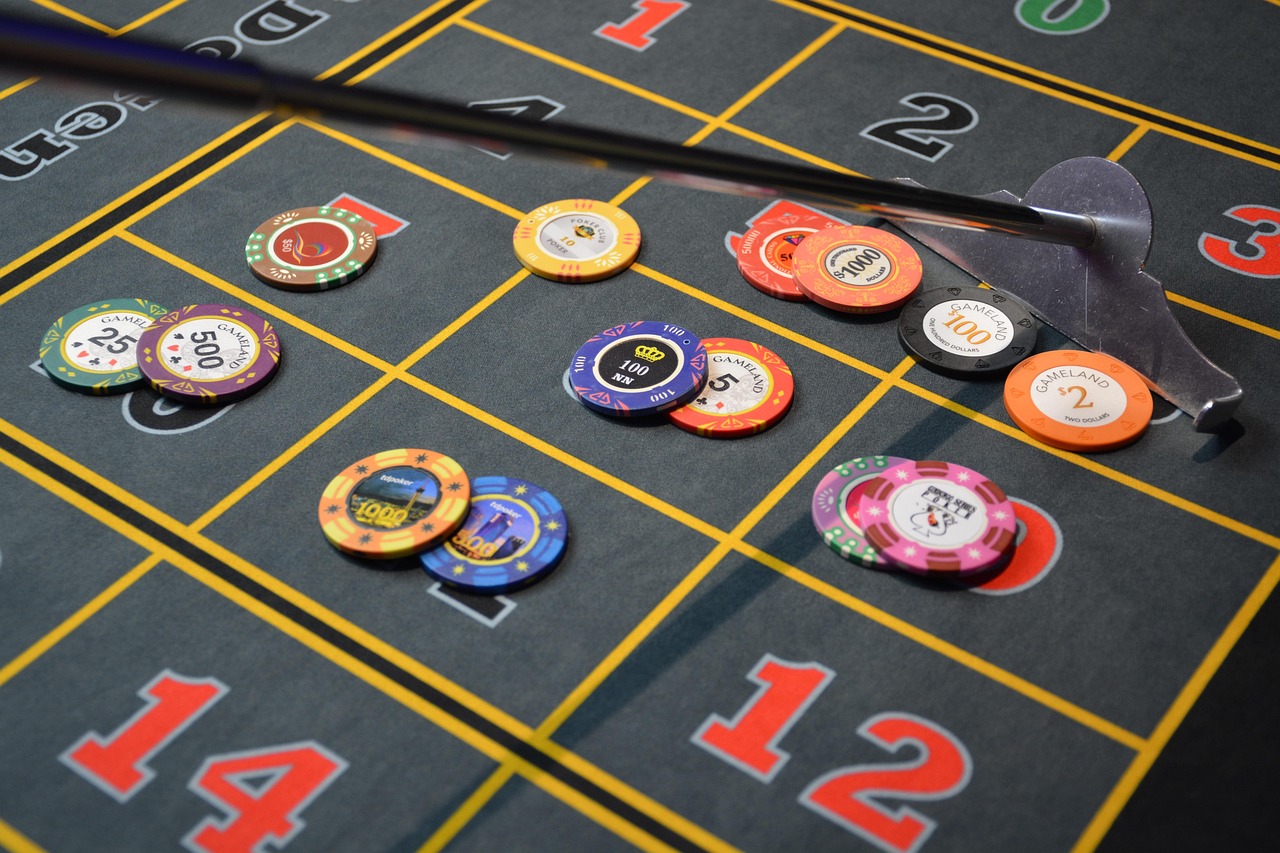
The House Always Wins? Inside the Real Math of iGaming
Everyone has heard the phrase, "the house always wins." It's the kind of cliché that gets tossed around at poker tables and slot floors until it loses all meaning. But here's the thing: it's not just a slogan. There is actual, cold mathematics behind why casinos, sportsbooks, and poker rooms turn a profit while most players eventually go broke. Understanding that math won't ruin the fun — it'll make you a sharper player. Whether you're spinning reels, grinding cash games, or betting on Sunday football, the numbers are the only honest dealer in the room. So let's pull back the curtain.
The House Edge, RTP, and Why They're Not the Same Thing
People constantly mix up two related but distinct concepts: the house edge and return to player (RTP). They describe the same reality from different directions, and confusing them is how players end up with unrealistic expectations.
The house edge is the casino's built-in profit margin. If a game has a 5% house edge, the casino expects to keep $5 of every $100 wagered over the long run. RTP is simply the inverse: 100% minus the house edge. A 95% RTP game returns $95 for every $100 wagered, theoretically, over millions of spins or hands.
Here's the detail most players miss: RTP is calculated over an infinite sample. You can sit at a 96% RTP slot for 500 spins and lose far more than 4% of your money. Variance doesn't care about your session length. The math only smooths out across millions of plays — which is exactly why casinos have thousands of machines running simultaneously. They're the ones actually experiencing the average.
- European roulette: 2.7% house edge (one green zero)
- American roulette: 5.26% house edge (two green zeros) — the worst common table game
- Blackjack with basic strategy: 0.5% or lower, depending on rules
- The house edge makes bankroll disappearance over enough time a probability, not a gamble
Slots: Where the Real Money (and the Real Trap) Lives
Walk into any casino and the slot floor takes up more square footage than everything else combined. That's no accident. Slots generate the majority of gaming revenue for most land-based casinos — often 70 to 80 percent — and the reason comes down to two things: volume and psychology.
Modern video slots are engineered with incredible care. Hit frequency on many titles sits between 20% and 40%, meaning you'll win often enough to stay engaged but lose often enough to fund the machine. Tune the volatility higher and you get rare, huge wins that feel fantastic but require a bigger bankroll to survive the droughts. Pick a low-volatility slot and you'll get frequent small returns that grind you down slowly rather than dramatically. There is a useful overview at สล็อตเว็บตรง.
Here's a practical tip: ignore the flashing graphics and check the game's published RTP. Reputable developers list it, and the range across modern online slots commonly runs from around 94% to 97%. A two or three percent difference sounds trivial until you realize it's a percentage of every single spin you make. On a $1,000 total wagering session, that's $30 you're handing over at 97% RTP versus $60 at 94%. Over the course of a year, the sharper choice keeps real money in your pocket.
Reading the Paytable Properly
A slot's paytable tells you more than people give it credit for. Look at the top symbol payouts, the number of paylines or ways-to-win, and especially the wild and bonus mechanics. A wild that substitutes for all symbols including scatters is worth far more than one with restrictions. Free-spin features that come with a multiplier unlock the biggest upside potential. The paytable is the blueprint — read it before you commit money.
Poker: The Only Game Where the House Doesn't Play You
Poker is the great exception in the casino ecosystem. Unlike slots, blackjack, or roulette, you're not playing against the house in a cash game. You're playing against other people, and the casino takes a small cut of each pot — the rake — for hosting the game.
That distinction changes everything. Because your opponent is human, a skilled poker player can have a positive expected value long-term. The math is beatable in a way that slots never are. But "beatable" is the operative word, and the margin is thin at low stakes.
- Pick your game wisely. Texas Hold'em is the most popular, but Omaha Hi-Lo often has softer, more recreational opponents in smaller rooms.
- Understand the rake's bite. A 5% rake capped at $5 in a small-stakes game can consume a meaningful chunk of your winnings — sometimes more than your edge.
- Track every session. Record wins, losses, hours played, and stakes. You cannot manage a win rate you don't measure.
- Play fewer but stronger hands. Discipline at preflop decisions separates long-term winners from break-even grinders.
The rake is also why live micro-stakes games can be extremely tough to beat. The casino skims value from every pot regardless of who wins. If your edge against opponents is 3% but the rake eats 5%, you're playing a losing game without ever sitting at a losing table. Online poker solves part of this because the cost of dealing cards is near zero, so you can find softer rake structures — mixed with a far stronger player pool.
Sports Betting: Reading the Odds and Finding Edge
Betting on sports feels more analytical than slots or table games, and that's partly true — good handicappers can find real edges. But the vig, also called the juice, works against every bettor. On a standard -110 line, you need to win roughly 52.4% of your bets just to break even. That's the bookmaker's cushion, and it's brutal for casual bettors who win slightly fewer than half their picks.
Sharp bettors hunt for a few things. Line movement is a clue; when a line moves sharply, money is coming in, and knowing whether that's "steam" from professionals or public sentiment from square bettors matters enormously. Look for stale or "ugly" lines at smaller books. Life is unglamorous, and profitable bettors profit because they understand the statistics and bankroll management better than most — the picks aren't the hard part.
The Psychology That Keeps Bankrolls Bleeding
All the math in the world doesn't matter if the mind is playing. Chasing losses is the single most damaging behavior pattern in gambling. It's the human need to recover what was lost, driven by a logical error: treating past outcomes as if they change the odds of future spins. They don't. Every spin of a slot is independent, and every roll of a dice has no memory.
Near misses on slots exploit the same wiring. Seeing a jackpot symbol land just slightly off creates a dopamine response similar to a small win, even though your bankroll shrank. This isn't paranoia — it's design. Good players are the ones who set loss limits before sitting down, and protect their capital.
The Bottom Line for Smart Players
None of this means you can't enjoy casino games and betting. It means you should walk in with the house edge understood instead of feared or ignored. Slots are entertainment with a mathematical cost attached — treat your buy-ins like tickets, not investments. Poker and sports betting reward study, discipline, and patience, but only for the minority who genuinely put in the work. Everyone else donates to the prize pile.
The best players aren't the ones chasing the guaranteed win, because no such thing exists. They're the ones who know when to play, how much to risk, and how to walk away before the math does what it always does. That's the whole game. Master the numbers before you start to fight them.
Share:

Building a Mediterranean Pantry in a Small Kitchen
Focus on vegetables, pulses, fish, olive oil and shared meals while adapting familiar British ingredients to warmer, lighter dishes.
5 Comments
-

Robert Sonny says Jul 21, 2024 at 10:00am
I must explain to you how all this mistaken idea of denouncing pleasure and praising pain was born and I will give you a complete account of the system
Reply-

John Abraham says Jul 21, 2024 at 10:00am
I must explain to you how all this mistaken idea of denouncing pleasure and praising pain was born and I will give you a complete account of the system
Reply-

Robert Sonnysays Jul 21, 2024 at 10:00am
I must explain to you how all this mistaken idea of denouncing pleasure and praising pain was born and I will give you a complete account of the system
Reply
-
-
-
Robert Sonny says Jul 21, 2024 at 10:00am
I must explain to you how all this mistaken idea of denouncing pleasure and praising pain was born and I will give you a complete account of the system
Reply
Leave a reply

Trending Topics
Popular Post
3 Sep 2026
A Food Lover's Guide to Crete
31 Aug 2026
How to Build a Simple Mezze Board for Guests

28 Aug 2026
Mediterranean Herbs Every UK Cook Should Know


How We Can
Help You!
Choose a hardy variety, use free-draining compost and protect roots from winter wet to keep potted olives thriving outdoors.
Contact Us
There are many variations of passages of Real stories, useful guides and the occasional recommendation, all in one calm corner of the web.
Important Link
Recent Post
Newsletter
Many desktop publi’s shing packages web page editors now is use sites.
Copyright © 2026 Olive Heath. All rights reserved.The Oliveheath.